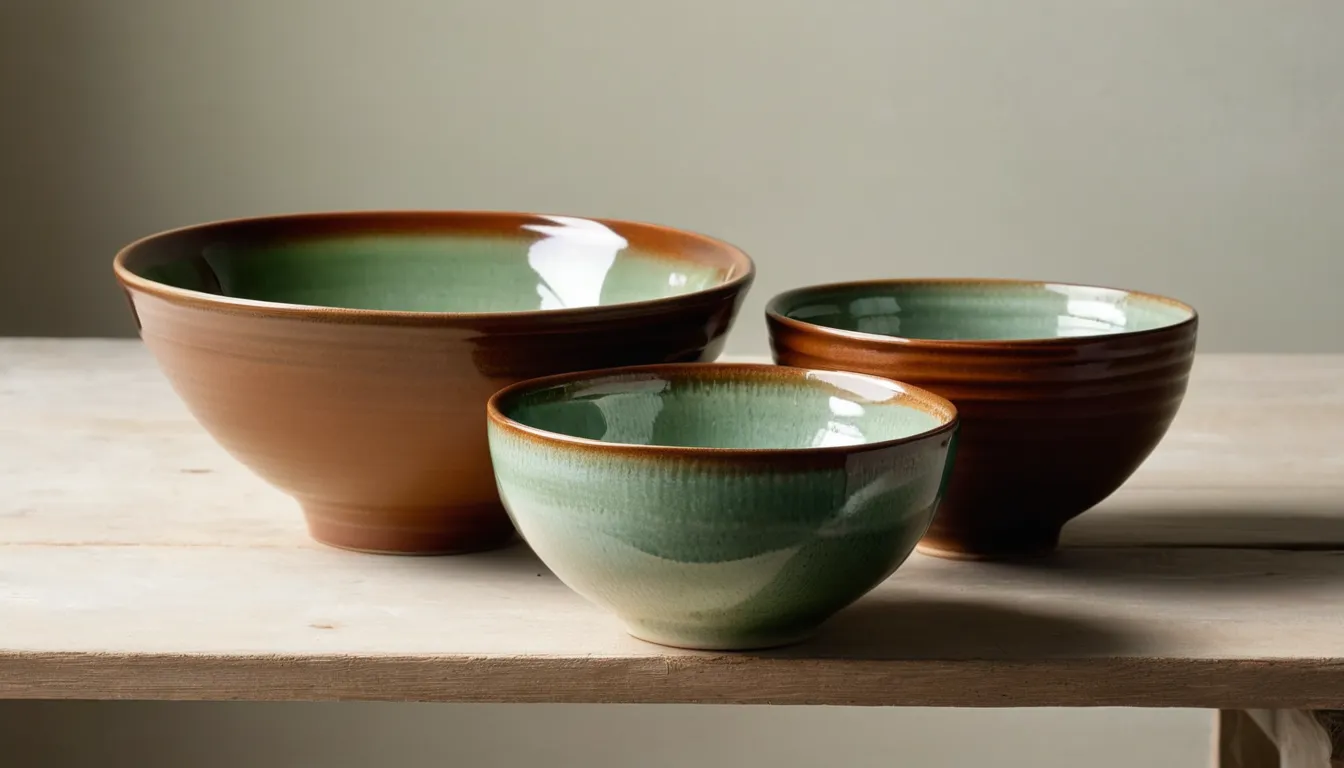
What glaze is made of
Most glazes are built from three kinds of ingredients. Silica forms the glass. Fluxes help the silica melt at a temperature a kiln can reach. Alumina, which usually comes from clay in the recipe, stiffens the melt so it stays on the pot instead of running off. Colorants such as metal oxides and commercial stains add color.
Beginners usually work with ready-made liquid glazes in jars or with the studio's own glaze buckets. Each one is made for a certain cone, which must match your clay and the firing it goes into.
Glaze, underglaze and slip
| Material | What it is | When to use it |
|---|---|---|
| Glaze | Glass-forming coating that melts in the kiln | On bisqueware, for color and a sealed surface |
| Underglaze | Colored clay-based paint that doesn't melt much | For painted designs, often under a clear glaze |
| Slip | Liquid clay, sometimes colored | On leather-hard clay, for decoration and texture |
| Wax resist | Wax that keeps glaze off where it is painted | On feet, lids and lid seats before glazing |
How to apply glaze
- Make sure the bisqueware is clean. Wipe off dust with a damp sponge and let it dry.
- Wax the foot and any surface that will touch the kiln shelf, or plan to wipe it clean.
- Stir the glaze thoroughly. Heavy particles settle to the bottom of the bucket.
- Dip, pour or brush. Dipping for a few seconds gives an even coat. Brushed glazes usually need two or three coats, as the label directs.
- Wipe the bottom and about a quarter inch (6 mm) up the side with a damp sponge.
- Check for bare spots and thick drips, and smooth them before the glaze dries hard.
Spraying glaze needs a ventilated spray booth and a suitable respirator, so leave it for later and do it only where the studio is set up for it.
Common glaze faults
| Fault | What you see | Common causes |
|---|---|---|
| Running | Glaze slides down and pools or sticks to the shelf | Applied too thick, too close to the foot, or overfired |
| Crawling | Glaze pulls back into beads, leaving bare clay | Dust or oil on the bisque, glaze applied too thick |
| Pinholes | Tiny holes in the fired surface | Gas escaping from the clay, thick application |
| Crazing | Fine network of cracks in the glaze | Glaze and clay shrink at different rates |
| Shivering | Glaze flakes off edges and rims | The opposite mismatch to crazing |
Test new glazes on small test tiles or the outside of a pot before you commit a whole piece.
What food safe means
A glaze used on mugs, bowls and plates should be stable, meaning it doesn't release harmful amounts of metals into food or drink. Many commercial glazes say on the label whether the maker considers them food safe when fired to a stated cone. That claim only holds if you follow the directions, on a clay that suits the glaze.
- Use glazes the maker labels as food safe for any surface that touches food or drink.
- Crazed glaze can trap food and bacteria. Many potters keep crazed pieces for decoration.
- Never use raw lead compounds. Read the label and safety data sheet for every glaze.
- For pieces you plan to sell, look into lab testing and the rules where you live.
Working safely with glaze materials
Dry glaze materials and clay dust contain silica, which can harm the lungs over time. Mix dry materials only with the protection the safety data sheet calls for. Clean up with a wet sponge or mop, not a broom. Don't eat or drink at the glazing table, and wash your hands when you finish.