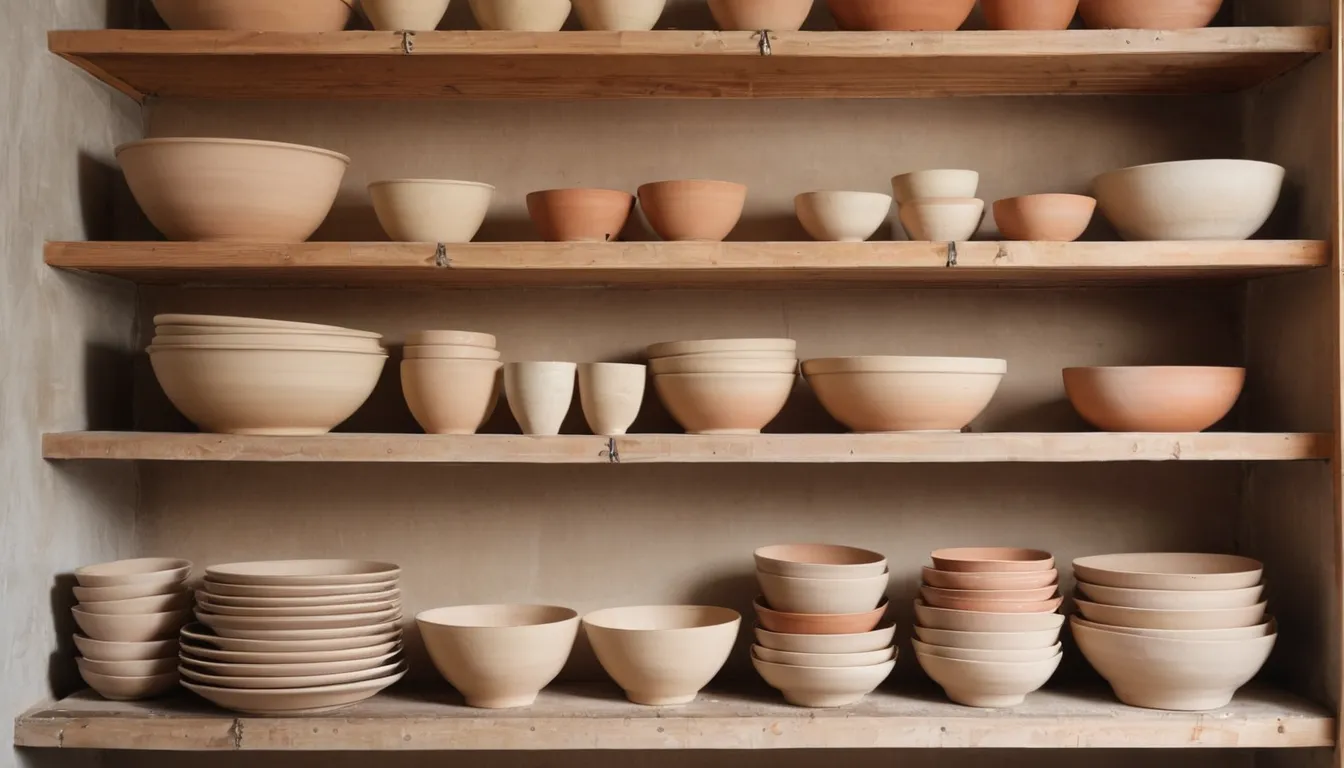
The stages of dry
| Stage | How it feels | What you can do |
|---|---|---|
| Plastic (wet) | Soft, bends easily, leaves clay on your hands | Shape, throw, pinch, coil |
| Soft leather hard | Holds its shape, still bends a little | Attach handles, add slip decoration |
| Leather hard | Firm like cheese, cuts cleanly, darker than dry clay | Trim, carve, join slabs, burnish |
| Bone dry | Pale, chalky, light, not cool to the touch | Fire it. Handle with care, it breaks easily |
Why pots crack while drying
Clay shrinks as water leaves it. If one part dries faster than another, the dry part shrinks first and pulls against the damp part. Cracks show up where that stress collects: rims, handles, joins and the place where a wall meets the floor. Thin parts dry fastest, so handles and rims are the usual first victims.
How to slow drying down
- Cover the pot loosely with thin plastic for the first day or two, then open it gradually.
- Wrap handles, rims and thin edges in a small strip of plastic so they keep pace with the thicker body.
- Dry pieces away from heaters, sunny windows and fans.
- Turn plates and wide forms upside down once they can take it, so the base dries at the same rate as the rim.
- Dry flat pieces on a surface that lets the bottom breathe, such as a ware board or a sheet of drywall.
Drying takes anywhere from a few days for small pieces in a dry room to a week or more for thick or large work in damp weather.
How to tell a pot is bone dry
A bone-dry pot is lighter in color and weight than it was at leather hard. A common test is to hold the pot against your cheek or the inside of your wrist. If it feels cool, water is still evaporating from it and it needs more time. Thick pieces can feel dry outside and still hold water inside, so give them extra days.
Water left in clay turns to steam in the kiln. In a thick or enclosed piece, that steam can crack the pot or burst it and damage other people's work. When in doubt, wait, and follow your studio's rules about what can go into a firing.
Handling greenware
Bone-dry clay is at its weakest. Pick pots up by the body with both hands, never by the handle or rim. Carry them on a board. Smooth rough spots gently with a damp sponge before it gets fully dry, because sanding dry clay makes fine dust that you shouldn't breathe.
Reclaiming clay
A pot that cracks or fails before firing isn't wasted. Unfired clay can be slaked down in water, dried to a workable state on plaster or canvas, and wedged again. Many studios keep reclaim buckets for each clay body. Once clay has been fired, it can't be turned back into workable clay.
When your pots are bone dry, they are ready for their first trip through the kiln. The firing guide covers what happens next.